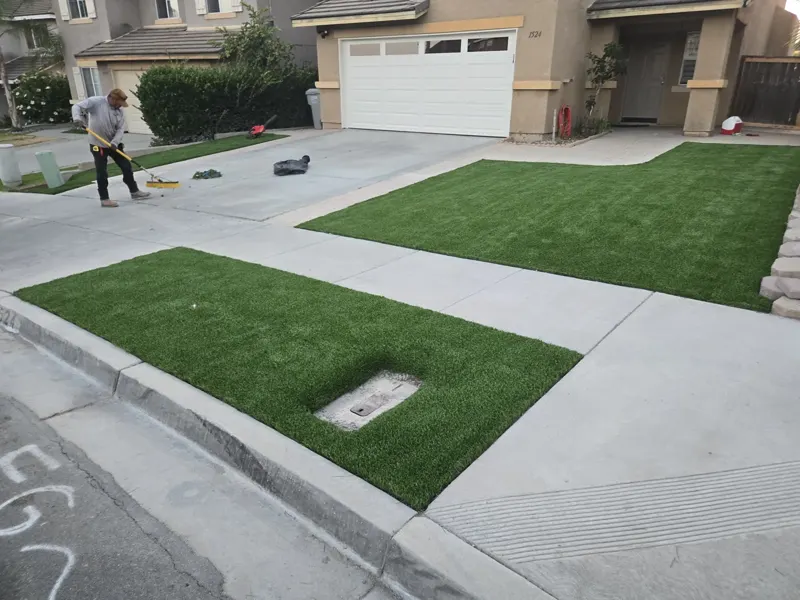
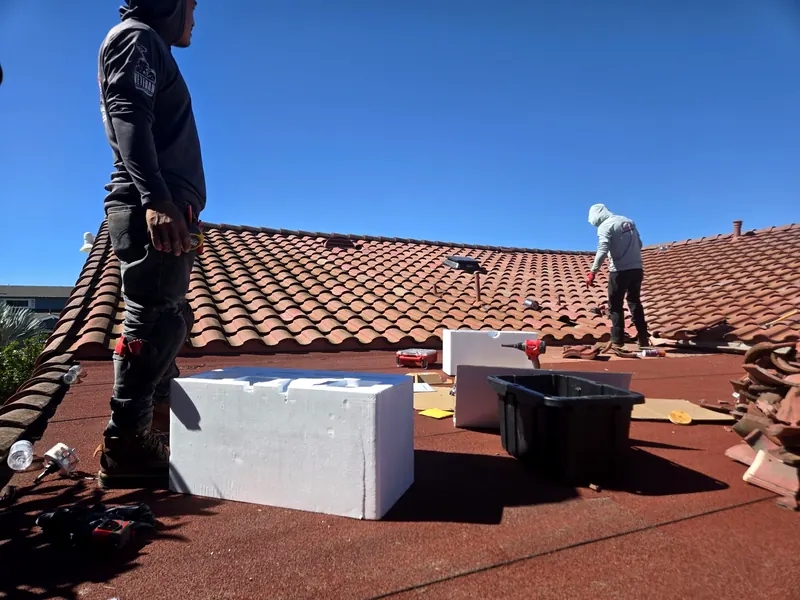
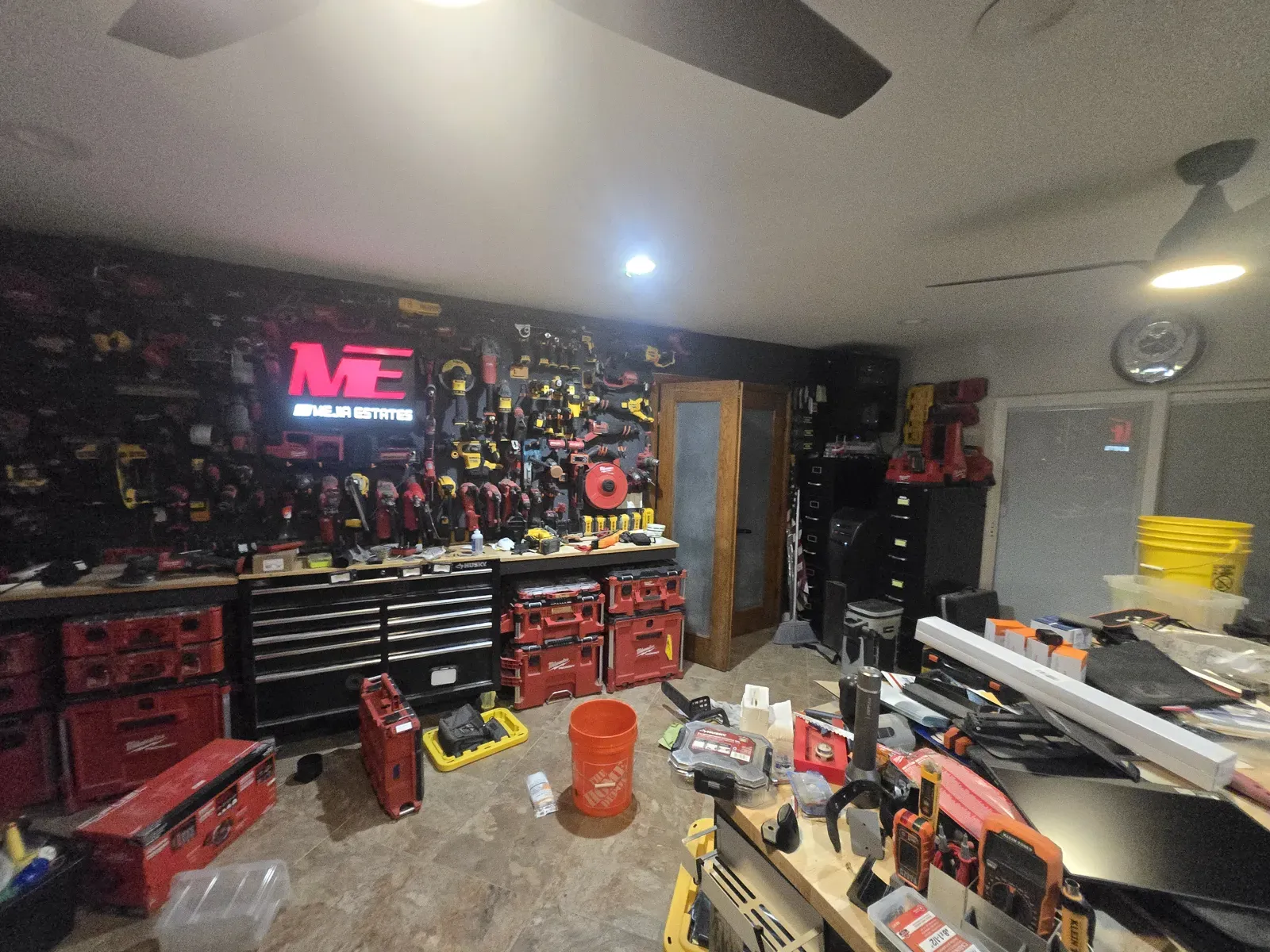
The pro site standard: setup, clean-up and first aid
How to set up a site on day one, how to walk into a client's home, and why clean-up protects your health, your wallet and your reputation.
Set up the site before you work
- Sort the trash: one spot each for trash, metal and recyclables, green waste, and hazardous items (paint, batteries, chemicals).
- Put an extra can or bag in each work area so nobody carries debris through the house.
- Set up a first-aid station with eyewash, somewhere everyone can see it.
- Brief everyone: where the kit is, what is in it and how to use it. A kit does no one any good if nobody knows how to use it.
- Photograph the driveway, floors and walls before you start, so nobody can blame you for damage that was already there.
- Decide where trucks park and where material and tools are staged.
The first-aid station
First aid: what everyone needs to know
You would be amazed how many guys, especially in their first five years, say "nah, I know what I'm doing" right up until they get a splinter in their eye. An injury costs a worker weeks of pay, and it costs a contractor a workers' comp claim that raises premiums for years. Don't play tough.
- The federal construction rule (OSHA 1926.50) calls for first-aid supplies within easy reach, checked before each job and weekly, and a trained person on site when no clinic is close by.
- Where workers are exposed to corrosive materials, including wet concrete, there must be a way to flush eyes and skin in the work area. A small bottle is only a backup.
- For construction, a Class B kit (ANSI Z308.1) is the practical choice: deeper supplies, a splint and a tourniquet.
Protect your eyes
Safety glasses all day, no matter what you are doing
Eyes do not only get hurt while cutting. It happens while sweeping, blowing, tearing off, drilling overhead, when the guy next to you runs a grinder or cut-off saw, or when a nail ricochets. Sparks, flying debris and dust give no warning. Put your glasses on when you arrive and take them off when you leave.
Bags, drop cloths and protection
Contractor bags vs regular trash bags
- Contractor bags (42 gal, around 3 mil): thick and puncture-resistant. For drywall, wood scraps, nails, tile and concrete chunks.
- Regular trash bags (13–39 gal, thinner): light trash like food, cups and packaging. Debris tears right through them.
- 50-pack or 32-pack? Compare the price per bag: today at Home Depot a 50-pack of 3 mil works out to $1.13 a bag and a 32-pack to 78¢. The 50-pack is for a crew working all week; the small pack is for a single job.
- Do not overfill: one person should be able to carry a debris bag without it splitting.
Drop cloths and protection: which one and when
- Canvas: floors and walking paths. It does not slip, soaks up paint and can be reused.
- Plastic sheeting: dust walls and covering furniture. Never on floors; it is slippery.
- Floor protection board or rosin paper: finished floors under heavy traffic; tape the seams.
- Shoe covers: they protect the client's floors, not your boots.
Show up like a pro
Before you arrive and before you bring in your gear
- Ask the client to clear the work area before you arrive. My phone call goes like this: "You can pay my guy by the hour to fix your problem or to move your stuff. Which do you prefer? Does it make sense to pay the technician $100 to clear out what you have under your sink?"
- If you still need to move something, have the client sign a written OK before you touch it.
- Photograph everything BEFORE you bring in your gear: it covers you, and it helps you remember where everything was if you have to move it.
- Watch your back: photos before, during and after.
How to walk into a client's home
As a property manager, nothing looks more professional to me than my guys showing up clean, with no torn clothes, in a nice logo shirt. The workers prefer dry-fit shirts with hoodies, and they look much cleaner than baggy, torn, stained sweats and a bandana on the head.
- For finish work or repairs, enter with a fresh set of booties and gloves, look at what you need, and go back out.
- Take the booties off outside. They are not there to keep your boots from getting scuffed; they are there to protect the client's flooring, so they come off every time you step out.
- Bring everything in one organized trip: the day's tools, broom, dustpan, vacuum, drop cloth, ladder, rolling tools, and a trash bag or bucket.
- In uniform, with a smile.
That keeps the professional image and makes a better work environment for you. Anything less guarantees the customer is looking over your shoulder, second-guessing you and wondering if you are stealing something or damaging their property.
The truck
Your truck and the client's driveway
- If you drive an older truck, park on the street. If you have to pull in, lay down a tarp or an absorbent mat and park on it.
- You would be amazed how some clients, especially in high-end neighborhoods, go crazy over an oil stain, or one they think they see. Sometimes it is just condensation dripping from the AC.
- And some will try to blame an old stain on their concrete or pavers on you to avoid paying. Your day-one photos protect you.
The shopping list
| Item | Why | Est. cost* | Buy or compare |
|---|---|---|---|
| 42 gal 3 mil contractor bags, 50-count | Drywall, wood scraps, nails, tile and concrete chunks | $56.50 at Home Depot ($1.13/bag) | AmazonHome DepotLowe'sAcmeWalmart |
| 42 gal contractor bags, 32-count | Good for a single job | $24.97 at Home Depot (78¢/bag) | AmazonHome DepotLowe'sAcmeWalmart |
| 13 gal kitchen bags | Light trash: food, cups, packaging in each work area | $10–$20 | AmazonHome DepotLowe'sAcmeWalmart |
| 32 gal trash can with lid, one per work area | Trash goes in a can, not a corner | $25–$45 | AmazonHome DepotLowe'sAcmeWalmart |
| Canvas drop cloth 9x12 | Floors and walking paths; reusable, does not slip | $20–$45 | AmazonHome DepotLowe'sAcmeWalmart |
| Plastic sheeting 6 mil | Dust walls and covering furniture; never on floors, it is slippery | $20–$40 | AmazonHome DepotLowe'sAcmeWalmart |
| Floor protection board or rosin paper | Finished floors under heavy traffic; tape the seams | $20–$80 | AmazonHome DepotLowe'sAcmeWalmart |
| Shoe covers (booties), 100-pack | Protect the client's floors; remove them before you step outside | $15–$30 | AmazonHome DepotLowe'sAcmeWalmart |
| Rolling magnetic sweeper | Every driveway and walkway before you leave | $30–$70 | AmazonHome DepotLowe'sAcmeWalmart |
| Class B first-aid kit (ANSI Z308.1) | The practical choice for construction | $60–$150 | AmazonHome DepotLowe'sAcmeWalmart |
| Eyewash station or bottles | Debris and splinters; wet concrete and chemicals need real flushing | $25–$120 | AmazonHome DepotLowe'sAcmeWalmart |
| Oil-absorbent mat or tarp for the truck | Park on it so the driveway stays clean | $20–$50 | AmazonHome DepotLowe'sAcmeWalmart |
| Dry-fit work shirts and logo hoodies | What the crew actually prefers, and it looks clean | $60–$200 | Chameleon GrafixAmazonHome DepotLowe'sAcmeWalmart |
* Typical price ranges at Home Depot, Lowe's and Amazon in October 2026; these are estimates, not quotes. The buttons show today's price. Buy the day-one kit first; buy the rest as the work and your wallet call for it.