Your manual wins. These are general practices. When your tool's manual says something different, follow the manual.
The short answer
| Job | Winner | Why |
|---|---|---|
| 3-inch deck screws, lag screws | Impact driver | Impacts keep driving when the screw resists |
| 1/2-inch hole in a stud | Drill/driver | Steady rotation, a chuck that holds round bits, and a clutch |
| 1/4-inch hole in concrete block | Hammer drill | Hammer action chips the masonry while the bit turns |
| Lots of holes in poured concrete | Rotary hammer (none of these three) | Piston-driven hammering is far faster |
How each one works
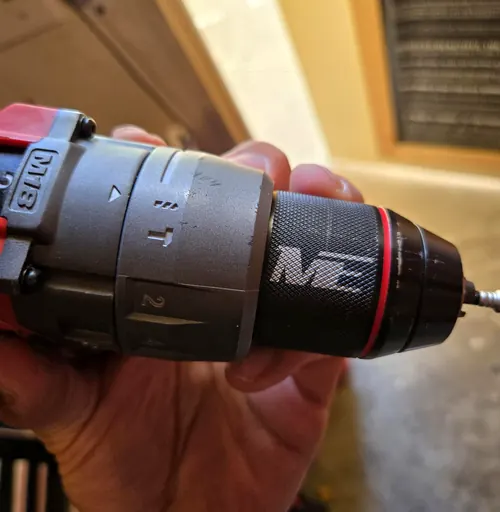
- Drill/driver: steady rotation, a keyless chuck for round or hex bits, and an adjustable clutch that stops driving at a set torque.
- Impact driver: rotation plus rapid rotational blows when resistance builds; hex-shank bits only; no clutch.
- Hammer drill: a drill/driver with an extra mode that adds a forward hammering motion for masonry.
Which to buy first
- Most people: a drill/driver and impact driver combo kit. It covers nearly all home and maintenance work.
- If you mount things on block or brick walls often, choose a hammer drill instead of a plain drill/driver; it does everything a drill does, plus masonry.
- Batteries are the expensive part. Choose the platform first, then the tools.
How we test it on camera
Same three tasks with each tool, timed, on the same materials: 3-inch deck screws into pressure-treated lumber, 1/2-inch holes in a stud, and 1/4-inch holes in block. Results go on the bench tests page.
Manufacturer instructions
Your tool manual is the final word. Find yours by model number:
Need the tool?
See today's dealsShop on AmazonCheck the free-tool kit deals before paying full price.